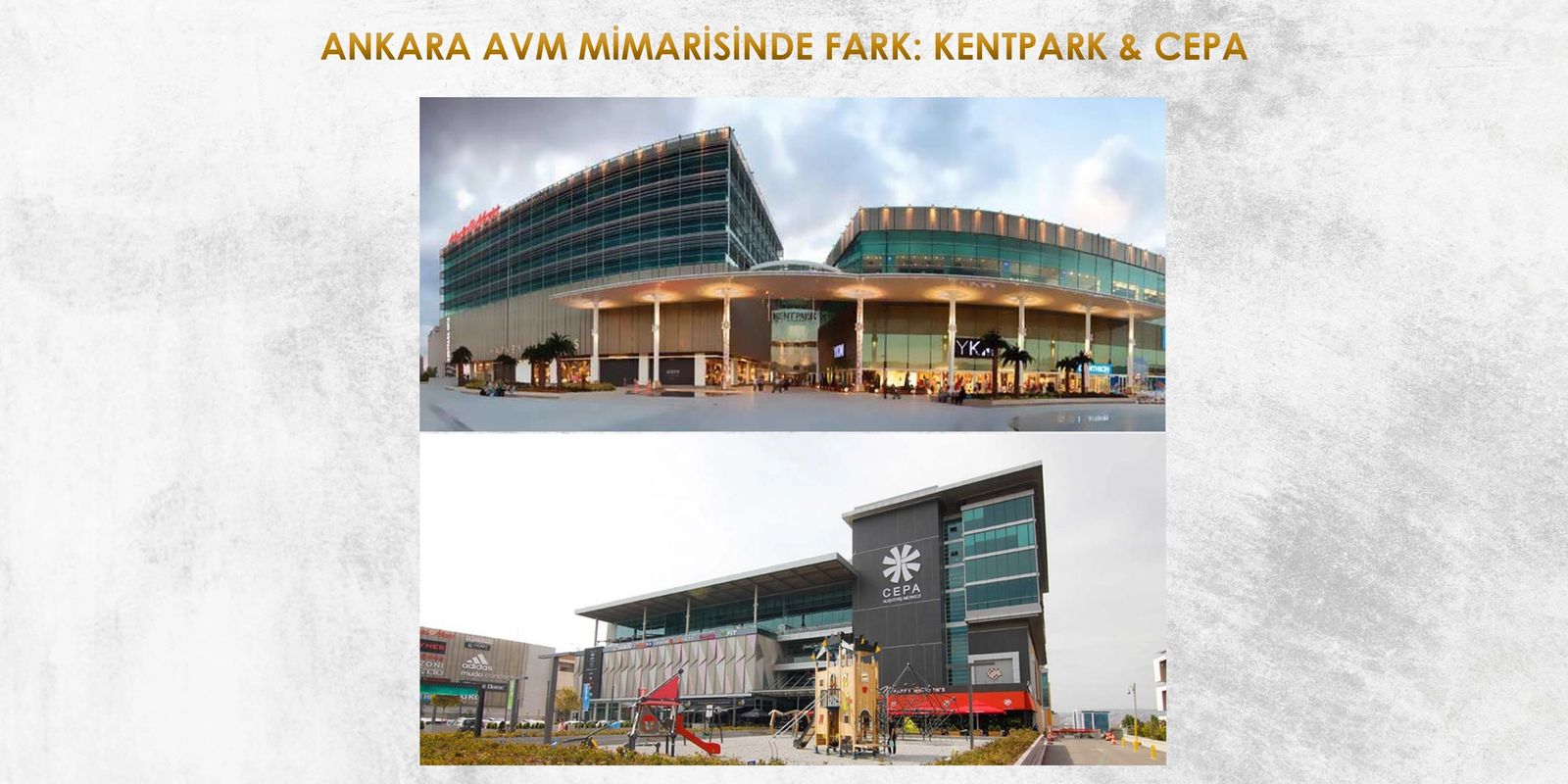
A DIFFERENCE IN ANKARA SHOPPING MALL ARCHITECTURE: KENTPARK & CEPA
Updated:
A DIFFERENCE IN ANKARA SHOPPING MALL ARCHITECTURE: KENTPARK & CEPA
Shopping mall culture has been an important part of Ankara for years. However, some structures transcend being merely shopping areas and become architectural examples that should be interpreted through the lens of user experience. Kentpark and Cepa shopping malls stand out precisely in this respect. Located side-by-side in the same area, these two shopping centers, while appearing similar at first glance, actually offer completely different architectural approaches and user experiences. So where exactly does this difference come from?
TWO DIFFERENT APPROACHES TO ANKARA SHOPPING MALL ARCHITECTURE
To understand Kentpark and Cepa, it's necessary to first draw a general framework. Shopping mall design is not just about the placement of stores. The real issue is how long you keep the user inside and how they feel during that time. Cepa has a more classic shopping mall design: A more compact floor plan A denser store layout Corridors that allow for fast circulation Kentpark, on the other hand, is more experience-oriented: Spacious open spaces and breathable volumes A less dense feeling Planning that encourages spending time in the space This difference clearly reveals two different approaches within shopping mall architecture in Ankara.
CIRCULATION DESIGN: HOW DO PEOPLE MOVE?
One of the most critical issues in shopping malls is circulation, that is, how people move within the space. In Cepa, navigation is more direct: Quick orientation after entrance Access to the store is quick More goal-oriented usage In Kentpark, however, navigation is more focused on "strolling": Wide corridors Visual axes and open spaces A design that encourages people to explore Therefore, user behavior changes: In Cepa, people "get their business done and leave," while in Kentpark, they tend to stay longer.
VOLUME, CEILING HEIGHT, AND SPATIAL PERCEPTION
One of the most important factors influencing whether we feel comfortable or cramped in a space is volume. Kentpark is quite strong in this regard: High ceilings Large atrium spaces Visual connection between floors These features give the user a feeling of spaciousness and make the space perceived as "prestigious." In Cepa, however, there is a more controlled volume: A feeling of lower ceilings More cramped circulation areas A more dense spatial arrangement While this offers a more practical and faster experience for some users, it can be tiring for others.
USE OF LIGHT: NATURAL OR ARTIFICIAL?
The use of light in shopping mall architecture is one of the most important elements directly affecting user psychology. In Kentpark: More prominent use of natural light Openings letting in daylight A more "living" atmosphere In Cepa: Artificial lighting is more dominant A more controlled but more enclosed environment It's a known fact that users stay longer in spaces with natural light. This explains why Kentpark is a shopping mall where people spend more time.
FACADE AND EXTERIOR RELATIONSHIP
A shopping mall is not just about the interior. The relationship it establishes with the outside is just as important as the interior. Kentpark: A more open and inviting entrance design A stronger relationship with the exterior The ability to create a sense of space without entering the building Cepa: A more closed facade language An inward-focused design approach This difference directly affects how the user is drawn inside.
USER EXPERIENCE: SHOPPING OR LIVING SPACE?
In fact, the point where all these architectural decisions converge is user experience. Cepa: Fast shopping Practical use Shorter visit duration Kentpark: Socializing Spending time Longer-term use Therefore, Kentpark is generally perceived as a "living space," while Cepa is positioned more as a "shopping point."
ARCHITECTURAL DECISIONS CHANGE EVERYTHING
The comparison between Kentpark and Cepa clearly shows us something: Even two buildings in the same city, in the same area, and targeting a similar audience can offer completely different experiences. This difference is created by: Planning decisions Use of space Lighting design Circulation design In short, architecture is not just something that is seen; it is something that is felt. Users often don't know the exact reason, but they sense these differences and make their choices accordingly.