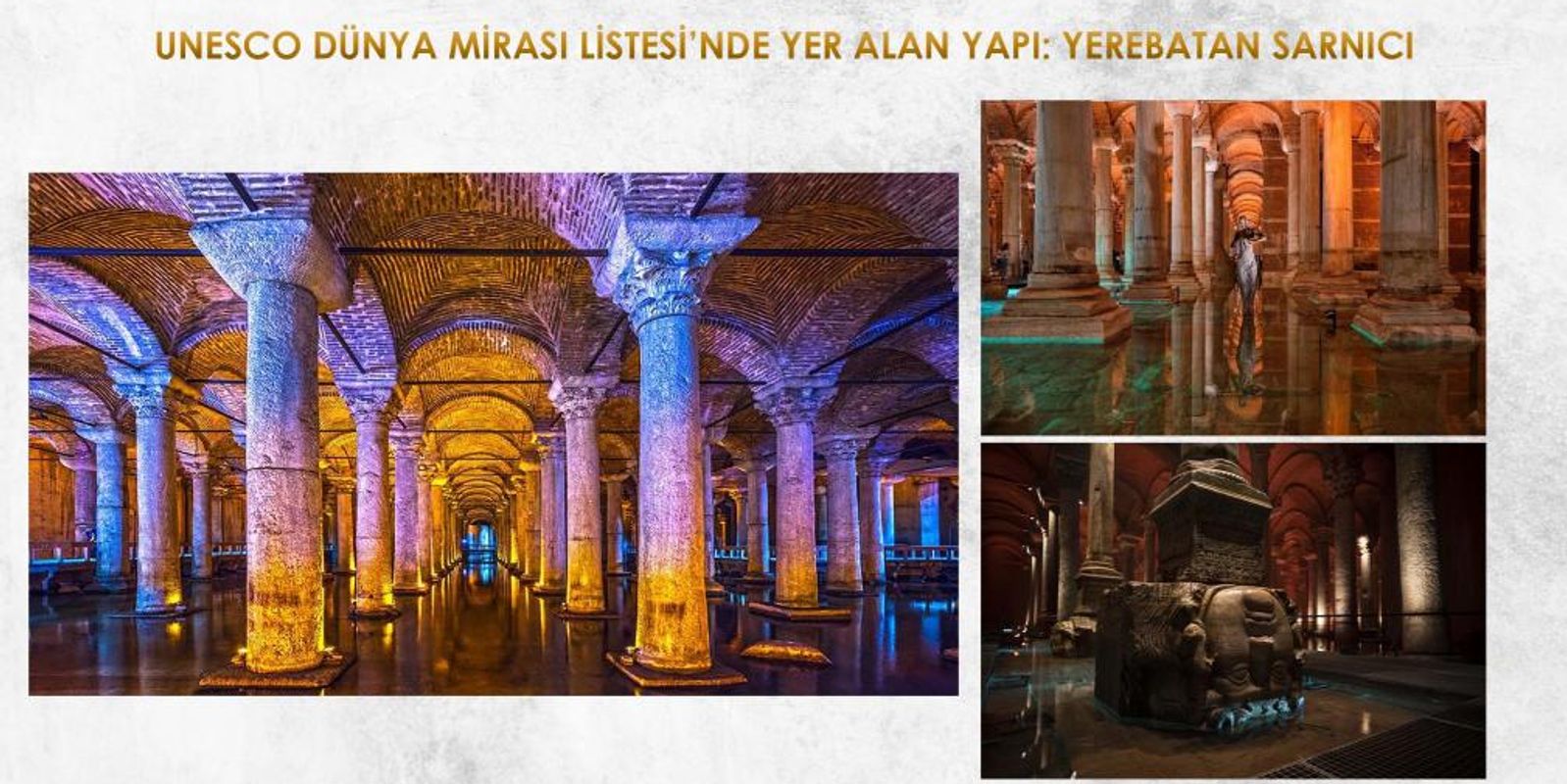
A UNESCO World Heritage Site: Yerebatan Cistern
Updated:
A UNESCO World Heritage Site: The Basilica Cistern
This week, T-COD Architecture will be discussing the Basilica Cistern, a significant structure reflecting Istanbul's rich historical and cultural heritage. Let's take a look at the history and architectural features of this UNESCO World Heritage Site, which captivates all who see it.
HISTORY OF THE JURISDICTION
Located between Hagia Sophia and Cağaloğlu, and hosting numerous international events, the Basilica Cistern is a Byzantine structure. It was built in 532 by the Byzantine Emperor Justinian I. As the best-preserved cistern in Istanbul, it was one of the most important water sources of its time. With an area of 9800 m² and a water capacity of 100,000 tons, the structure was discovered by local fishermen approximately 100 years after the conquest of Istanbul. During the Ottoman period, it largely met the water needs of the surrounding population. The structure, which was repaired twice during the Ottoman era, was first restored in 1723 during the reign of Ahmed III by the architect Mehmet Ağa of Kayseri, and the second restoration was carried out during the reign of Sultan Abdul Hamid II. In 1987, it was renovated again by the Istanbul Municipality, and a viewing platform was added, making it a tourist attraction. Due to its age exceeding 1000 years, the Basilica Cistern underwent a major cleaning and maintenance in 1994, and was reopened to visitors following the latest restoration and strengthening works that began in 2017.
ARCHITECTURAL FEATURES OF THE YEREBATAN CISTERN
The Yerebatan Cistern, with its impressive architecture that transports one to another world, is estimated to have been built using the labor of over 7,000 slaves and to have taken 38 years to complete. Built of brick on a rocky foundation, the rectangular-plan structure's dimensions were first measured by the German archaeologist Eckinard Unger during World War I, and it was stated to be 138 x 64.6 meters. It is supported by 336 columns, each 9 meters high, which hold the brick vault. With a length of 140 meters and a width of 70 meters, it covers a vast area. The floor and thick walls of the Yerebatan Cistern are plastered with a thick layer of a material called "Horosan Mortar," making it waterproof. Access to the cistern is via a 52-step stone staircase. The columns supporting the structure's weight are carved from various types of marble, apparently collected from older buildings. Therefore, some columns reflect Doric architectural aesthetics, while others reflect Corinthian architectural aesthetics. One of the most striking features of the cistern is the Medusa heads atop its columns, which are the subject of mythological stories.
YEREBATAN CISTERN: THE WEEPING COLUMN
The peacock eye motifs on the column resemble tears, and it always appears wet compared to other columns. Therefore, it seems to be constantly weeping. According to legend, this column represents the suffering endured by the 7,000 slaves who worked on the construction of the Yerebatan Cistern. The Yerebatan Cistern offers visitors a mystical experience with its architectural features and the captivating atmosphere created by the water inside. Today, various cultural events and exhibitions further enhance its importance. Furthermore, the walkways inside the cistern allow visitors to explore every corner of it.