FIRE SAFETY IN BUILDINGS
Updated:
FIRE SAFETY IN BUILDINGS
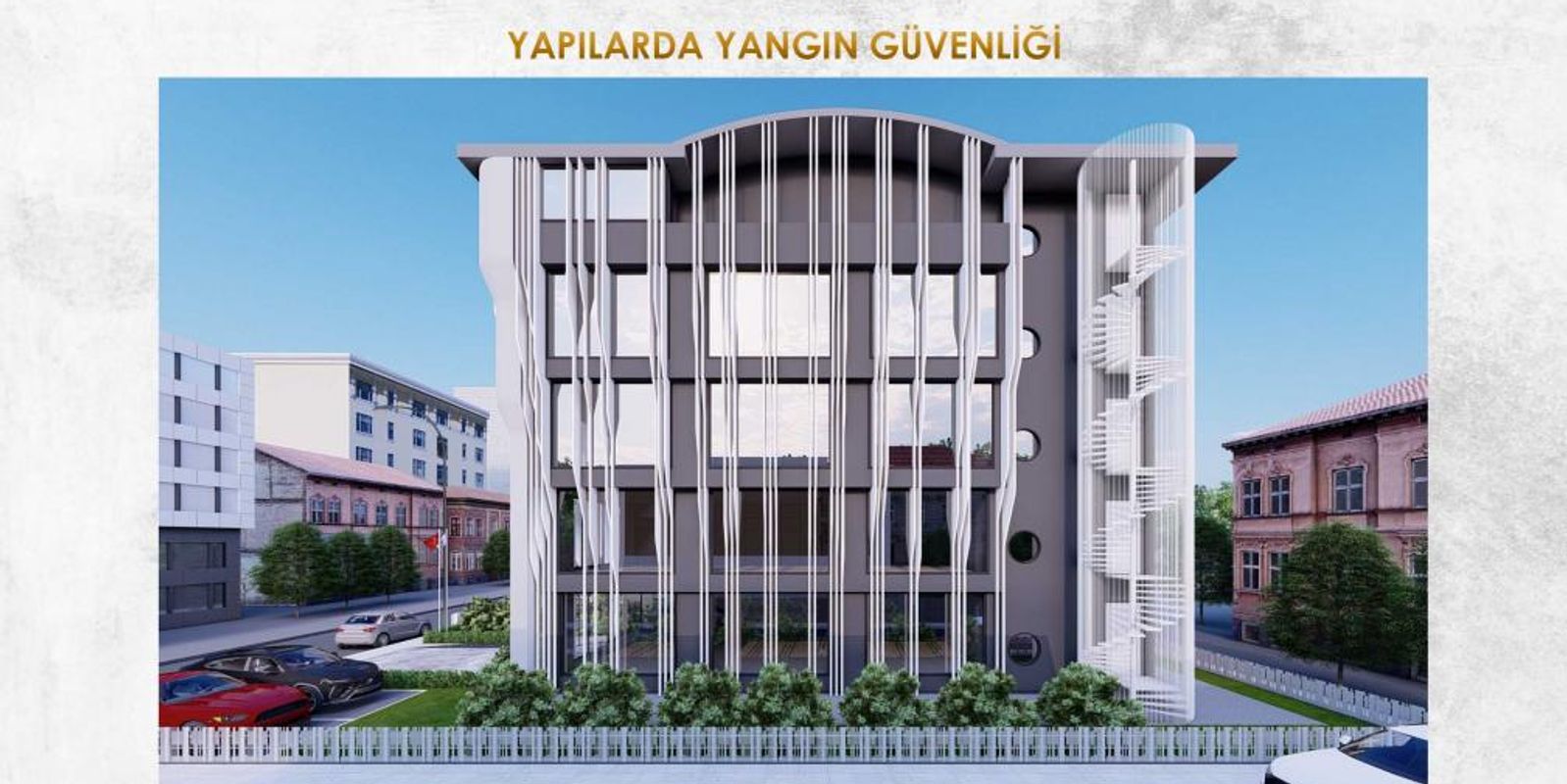
Fire safety is a critical measure that must be taken throughout the lifespan of buildings, starting from their design. Of great importance in preventing both loss of life and property, fire safety is divided into two categories: passive fire safety measures and active fire safety measures. The process begins at the building design stage. Evacuation projects prepared for passive fire safety measures are prepared separately from the architectural project, while fire detection, alarm, and extinguishing projects prepared for active fire safety measures are prepared separately from the mechanical project. Detailed regulations must be made during the building design phase, covering many aspects from the dimensions of fire escapes to the mandatory use of fire extinguishers. Within the scope of architectural design, the fire resistance duration of building elements, the fire reactions of building materials, measures related to the protection of the building's load-bearing system, proposed solutions to prevent smoke spread, escape routes, escape staircases, and escape route planning criteria should be determined at the design stage, and fire evacuation projects should be drawn up according to all these parameters.
Providing a sufficient number and capacity of exits is the most important element in evacuation plans. Evacuation routes should consist of safe areas created with building materials that are isolated from fire and smoke and have properties that prevent the spread of fire. Escape routes should be illuminated and have directional signs to help users easily find their way in emergencies. Fire escapes are vertical exit routes along the escape route. For a staircase to be usable during evacuation and considered an escape staircase, it must first be made fire-resistant. The number of escape staircases is determined according to the user load calculations on the floors and the building height. When drawing the evacuation plan from building sections to the corridor, to the vertical exit route (i.e., to the fire escape if there is one in the building, otherwise to a protected ramp, tunnel, etc.), and to the final safe exit, the furnishings are taken into account and the actual route the user will take is calculated. As we have seen in many incidents in our country, correct architectural design and implementation in accordance with regulations are of vital importance. As T-COD Architecture, we hope that a similar tragedy to the hotel fire in Bolu will not happen again. Our thoughts are with Bolu…