SMART MONITORING CENTERS: A POWERFUL MEETING OF TECHNOLOGY AND ARCHITECTURE
Updated:
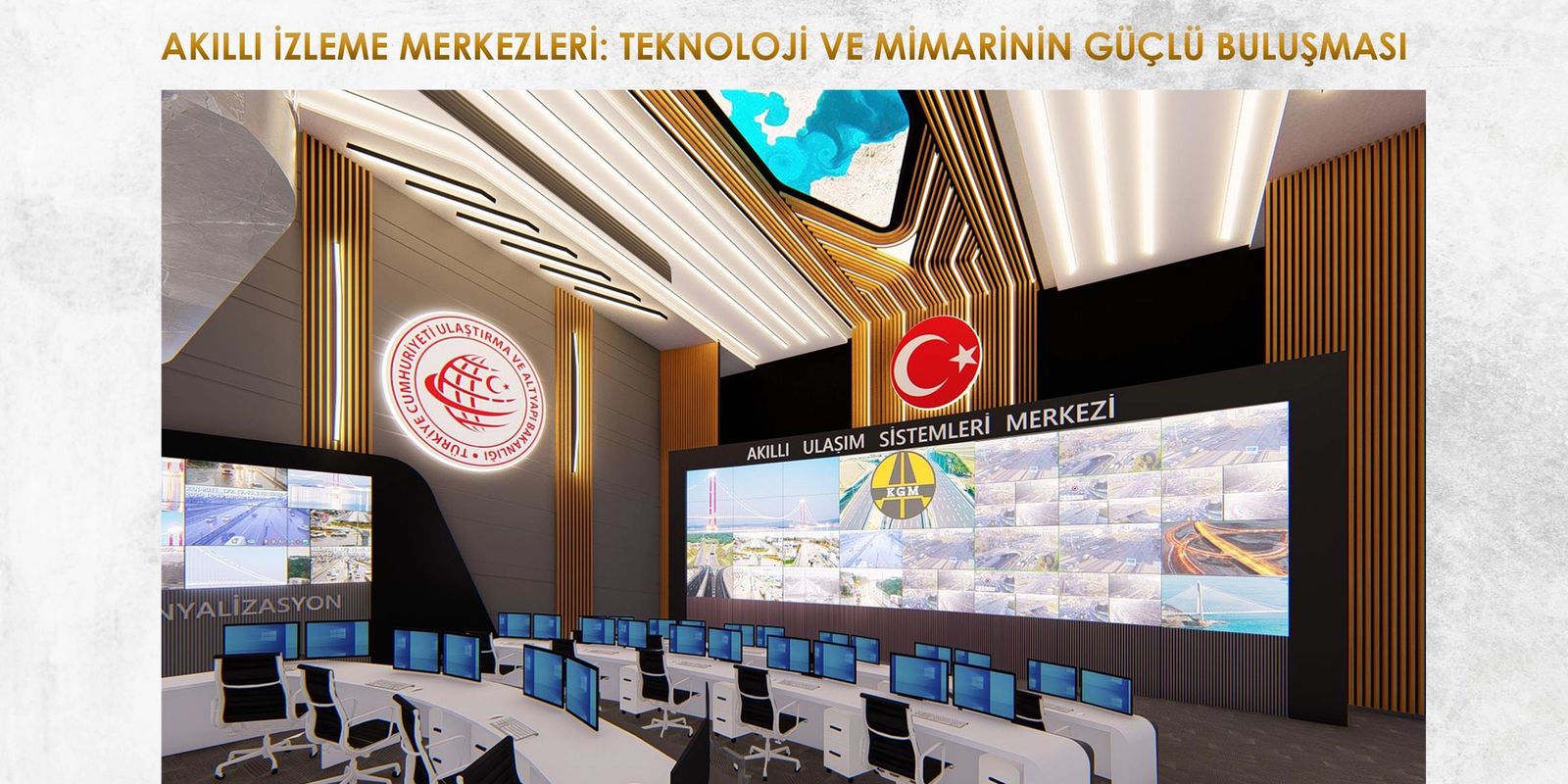
Smart Monitoring Centers: The Powerful Meeting of Technology and Architecture As T-COD Architecture, this week we will talk about smart monitoring centers that have gained importance in recent years and how these structures meet architecture. Energy production, urban security, transportation systems and industrial facilities... In all these areas, smart monitoring centers are no longer limited to just surveillance functions. Today's smart monitoring centers: It gives meaning to the data, It makes it possible to make quick decisions, It offers high comfort to the user. With this change, architecture goes beyond function and assumes a role that supports, complements and strengthens these systems. From Observation Point to Strategic Command Center In the past, monitoring centers were just sterile spaces lined with screens and filled with technology. Today, Smart Monitoring Centers highlight elements such as data management, instant response capability and sustainability. What is now expected from a smart monitoring center: Not watching; to understand, To direct, Activate. The Role of Architecture in Smart Monitoring Center Design Since smart monitoring centers are structures that contain multi-layered functions, the design process should consider user experience as well as operational efficiency. Elements to consider: Visual comfort: Controlled use of natural light increases energy efficiency while preventing glare on screens. Flexible space setup: Modular interior solutions offer spaces that can quickly adapt to different operation scenarios. Spatial hierarchy: Increases the effectiveness of command centers in decision-making processes. Acoustics and thermal control: Critical to operating efficiency. New Generation Intelligent Monitoring Center for Wind Power Plant
As T-COD Architecture, we adopt this understanding in our smart monitoring center project that we developed for the Wind Power Plant. The project is not just about managing the power plant remotely; At the same time, we have created an interior architecture system that allows staff to work with high concentration and establishes a balance between technology and the environment. Monitoring data flow has become easier thanks to open-plan solutions. Controlled partitioned areas provided privacy when necessary. A functional and human-oriented space was designed with facade openings that establish a visual connection with nature and a light setup that optimizes daylight. Smart Monitoring Centers of the Future: Adaptive and Human-Friendly The future of smart monitoring centers will be shaped not only by technology but also by its relationship with people and the environment. For us architects, this means combining functional efficiency with aesthetic and sustainability principles. Thus, both people and machines can work more effectively and healthily in smart monitoring centers, where the heart of technology beats. With the experience we have gained as T-COD Architecture, we continue to work to make the monitoring centers of the future not only smarter, but also more livable and sustainable.