ARCHITECTURE AND TECHNOLOGY INTEGRATION IN NEV201 OFFICE PROJECT: NEW GENERATION OFFICE DESIGN WITH SMART SCREEN
Updated:
NEW YORK BIG (BJARKE INGELS GROUP): A CONTEMPORARY ARCHITECTURAL LANGUAGE SHAPED IN URBAN DENSITY
This week, as T-COD Architecture, we are taking a closer look at Bjarke Ingels Group (BIG), which is frequently talked about with the projects it produces in New York. What makes BIG special; It treats architecture not only as structures that appeal to the eye, but as a part of city life. This approach is felt very clearly, especially in a crowded, fast and constantly changing city like New York.
HOW DOES BIG ARCHITECTURE THINK?
According to BIG, architecture is not just about designing a beautiful building. How people live, how they use a building, and how they relate to the city around them is at least as important as the form. That's why daily life, environmental conditions and the needs of the city are considered together during the design process. We see this very clearly in New York projects. The shape of the land, the height of the buildings, the direction of sunlight or the relationship with the street; forms the basis of the design. So, first of all, "how does the building get along with the city?" It answers the question.
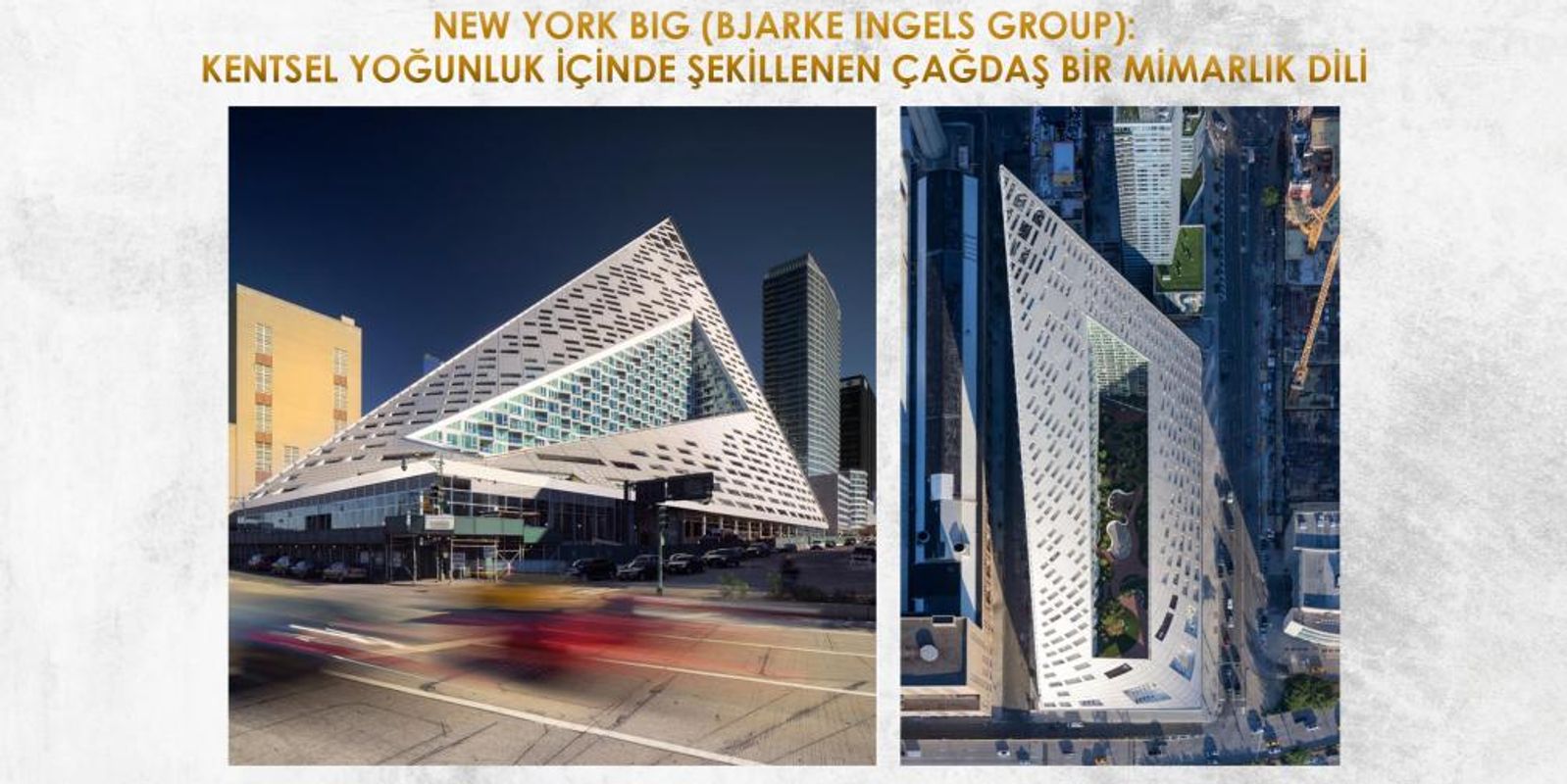
MASSES, TERRACES AND THE RELATIONSHIP WITH THE CITY BIG's buildings in New York are often not flat and monolithic. Thanks to receding floors, stepped volumes and terraces, the buildings look lighter and benefit from more daylight. This approach makes buildings no longer just objects viewed from a distance. Thanks to terraces, open spaces and surfaces opening to the view, the building establishes a closer relationship with the user. It also adds a strong but balanced character to the city skyline.
PUBLIC SPACE IS ALWAYS INVOLVED
In BIG projects, ground floors are generally not closed and disconnected. On the contrary, they are designed as areas where people can easily enter, exit, walk and spend time. Thus, the building becomes a part of the street it is located on. As you go up to the upper floors, quieter and private areas come into play. These transitions are clear but natural. The building offers a balanced combination of both public and user areas.
SUSTAINABILITY: MORE BENEFITS THAN VIEW
For BIG, sustainability is not just about looking “green”. Facades that consume less energy, natural ventilation, green roofs and spaces that use daylight well are considered from the very beginning of the design. In this way, more comfortable, long-lasting and pleasant structures to live in emerge, even in busy cities. Architecture is not just about producing forms; It's about adapting to its location and making human life easier.