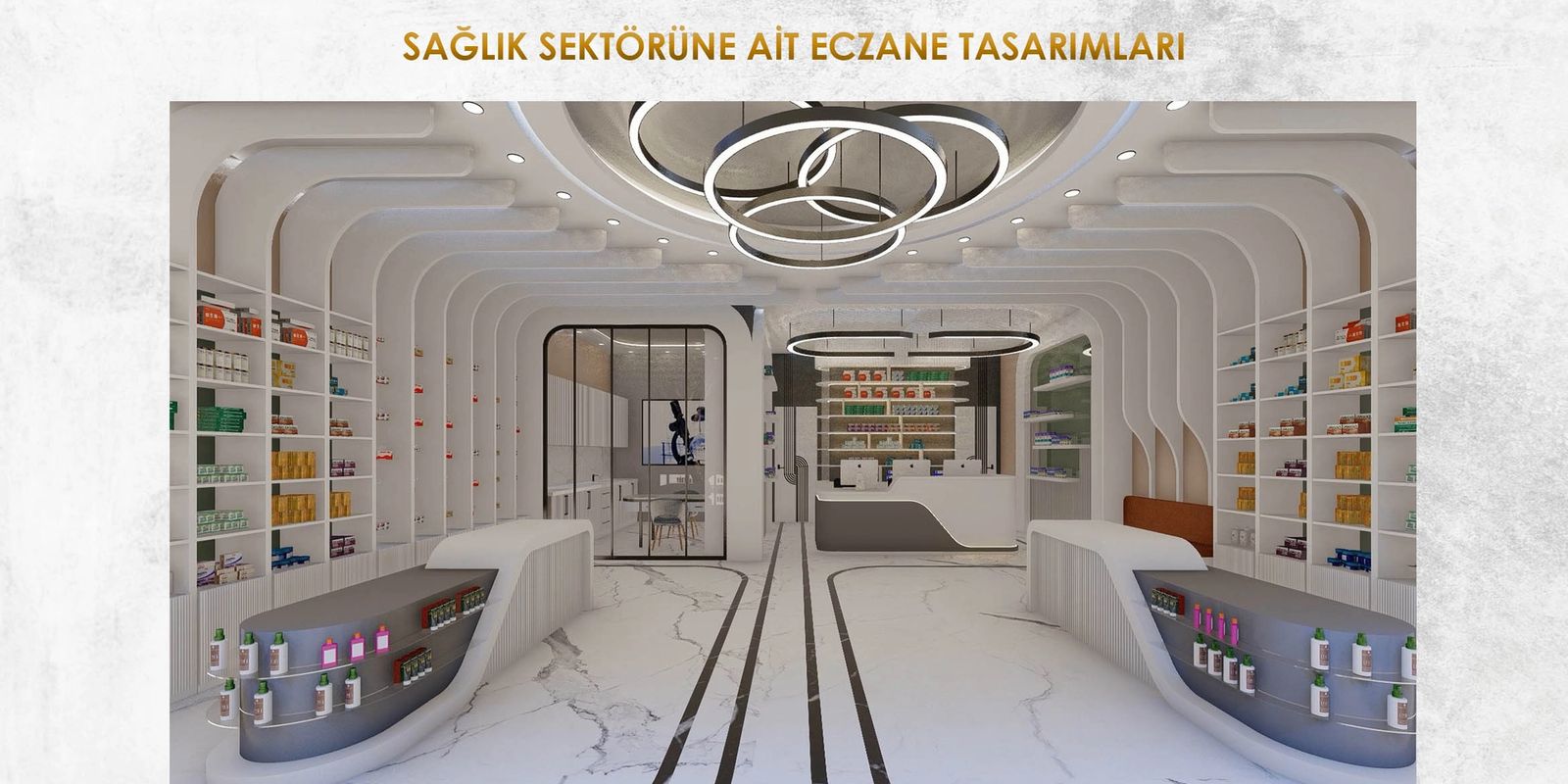
PHARMACY DESIGNS FOR THE HEALTHCARE SECTOR
Updated:
PHARMACY DESIGNS FOR THE HEALTHCARE SECTOR
Today, we at T-COD Architecture want to talk about pharmacy designs. Let's take a look at how pharmacy design should be and the elements to consider in pharmacy designs. Pharmacies are places where our health needs are met, and they are no longer limited to just selling medicines; they offer a wide range of products, including dermocosmetic products. Due to the healthcare sector they serve, cleanliness and hygiene are even more important for pharmacies. Therefore, the priority of pharmacy designs is to provide users with a clean and sterile environment. In pharmacy designs that offer specialized areas according to their functions, hygiene and safety are important elements of the design.
COLOR IN PHARMACY DESIGNS
Colors play a very important role in architectural designs. The effect of colors on people is now known by everyone. In designs for the healthcare sector, the preference for light colors will create a bright and hygienic effect. Vibrant colors that will create a focal point for customers can be used sparingly in pharmacy designs. These could be colors such as mustard yellow, orange, blue, and green.
LIGHTING IN PHARMACY DESIGNS
Pharmacy designs should create a stylish and modern look. Lighting plays a major role in this design. In healthcare design, lighting is one of the most important elements in achieving the "clean" look we want. In addition to aesthetics, the right lighting elements should be chosen to create comfortable working areas. LED lights, light strips running along the medicine shelves or on the ceiling provide holistic lighting while creating a modern atmosphere. Lighting systems also create bright areas in the space, ensuring a hygienic appearance.
TEXTURE IN PHARMACY DESIGNS
In pharmacy designs, materials with a glossy surface, easy to clean, and that won't accumulate dirt should generally be preferred. Therefore, furniture should have a smooth, glossy, and reflective texture. Similarly, furniture used in customer waiting and resting areas should be chosen with ergonomic textures and shapes for the user.
PHARMACY DESIGN AND FURNITURE
In furniture design, attention should be paid to factors such as the size of the space and the minimum required circulation area. The dimensions and locations of furniture such as medicine shelves, cabinets, counters, and cash registers should be determined after a detailed spatial analysis. If necessary, additional systems such as heating and cooling should be implemented in cabinets and shelves according to the properties of the medicines. Creating storage areas and designing the shelves in a more accessible way will allow for more functional use of the space. Designing shelves to suit the dimensions of medicines and positioning counters in the right places will make the space more usable.
T-COD ARCHITECTURE AND PHARMACY DESIGN
As T-COD Architecture, we have added a new service to our services in the healthcare sector. With our pharmacy project in Next Level Residences/Çayyolu, we have created an aesthetic and functional design by creating an organized and clean environment. Designed by considering many elements such as color, lighting, texture, and furniture, our pharmacy project is preparing to serve its customers with its striking design and implementation.